Uta Wehde
The Runaway-house: Asylum for (ex-) users and survivors of psychiatry.
Experiences, conceptions, problems
(= Das Weglaufhaus – Zufluchtsort fuer Psychiatrie-Betroffene. Erfahrungen,
Konzeptionen, Probleme)
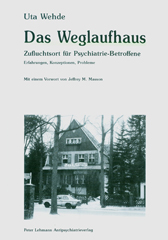 Soft
cover, 192 pages. Preface by Jeffrey M. Masson. ISBN 978-3-925931-05-5.
Berlin: Peter Lehmann Antipsychiatrieverlag 1991. Published in the German
language!
Soft
cover, 192 pages. Preface by Jeffrey M. Masson. ISBN 978-3-925931-05-5.
Berlin: Peter Lehmann Antipsychiatrieverlag 1991. Published in the German
language!
This book is completely sold out.
As a replacement, we recommend the book "Alternatives Beyond Psychiatry", edited by Peter Stastny & Peter Lehmann, featuring the contributions "Finding common strength together: The Berlin Runaway House" by Petra Hartmann & Stefan Bräunling and "Antipsychiatric work by relatives: Unrestrained anger and commitment to alternatives" by Uta Wehde.
Information in German | About the book in Dendron News | Home"The power of running away is immense", writes Jeffrey M. Masson, former psychoanalyst and director of the Sigmund-Freud-archives, in his preface to the first book of the Berlin psychologist Uta Wehde.
"In the (former) German Democratic Republic (GDR), the first glimpse of freedom from oppression came when a few brave people actually ran away. Uta Wehde shows us it can happen in psychiatry too, and the walls of that decripit institution can crumble too." (Masson)
People run away from psychiatric institutions daily. They escape from treatment with psychiatric drugs and electroshocks, from confinement and humiliation. In some bigger towns in the Netherlands so-called runaway-houses – comparable to battered wives refuges – are providing asylums for people that have run away.
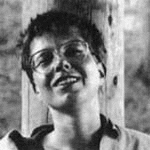 Uta Wehde (see the photo) reports her observations in such a Dutch runaway-house,
discusses these observations in connection with other alternative approaches
(f.e., Soteria by Loren Mosher or Diabasis by John Weir Perry) and draws
the obvious conclusion for the conceptional arranging of new runaway-houses.
Uta Wehde (see the photo) reports her observations in such a Dutch runaway-house,
discusses these observations in connection with other alternative approaches
(f.e., Soteria by Loren Mosher or Diabasis by John Weir Perry) and draws
the obvious conclusion for the conceptional arranging of new runaway-houses.
In Berlin the opening of the first German runaway-house already is announced. Here the runaway people shall receive juridical, social, psychological and medical support, and assistance when they come down from the drugs. In the supplement of her book Uta Wehde introduces the conception of the Berlin runaway-house and, exciting to read like a thriller, the toing and froing about the public funding of the house, which is bought by a million-DM-gift and risen on the stage of actual reporting. (By the way, the photography of the book's front-cover shows the house.)
With its differentiating statements the sparkling-written book passes over this special form of support; it gets to talking about the principal question, how to help people that may have problems with themselves, the world around them and/or the psychiatry. The author is orientated centrally towards the right to drug-free help and user-control. Her criterias of real human help she develops out of statements by people who worked and lived in the Utrecht runaway-house. And she respects a lot of informations from ›users‹ of psychiatry as well as from people running alternative institutions – informations, that are published yet only in a small circuit. Uta Wehde sums up these alternative experiences and gives an voluminous survey over the literature about the issue "alternatives to psychiatry".